Diagnosing Electronic Suspension and Damper Control Systems
Adaptive and electronically controlled suspension systems adjust damping force in real time based on road surface, vehicle speed, and driver mode selection. When these systems fail, the symptoms can be subtle — a slightly harsh ride over small bumps, a warning light that appears only after extended driving, or a message indicating suspension fault without an obvious mechanical cause.
System Components and Data Flow
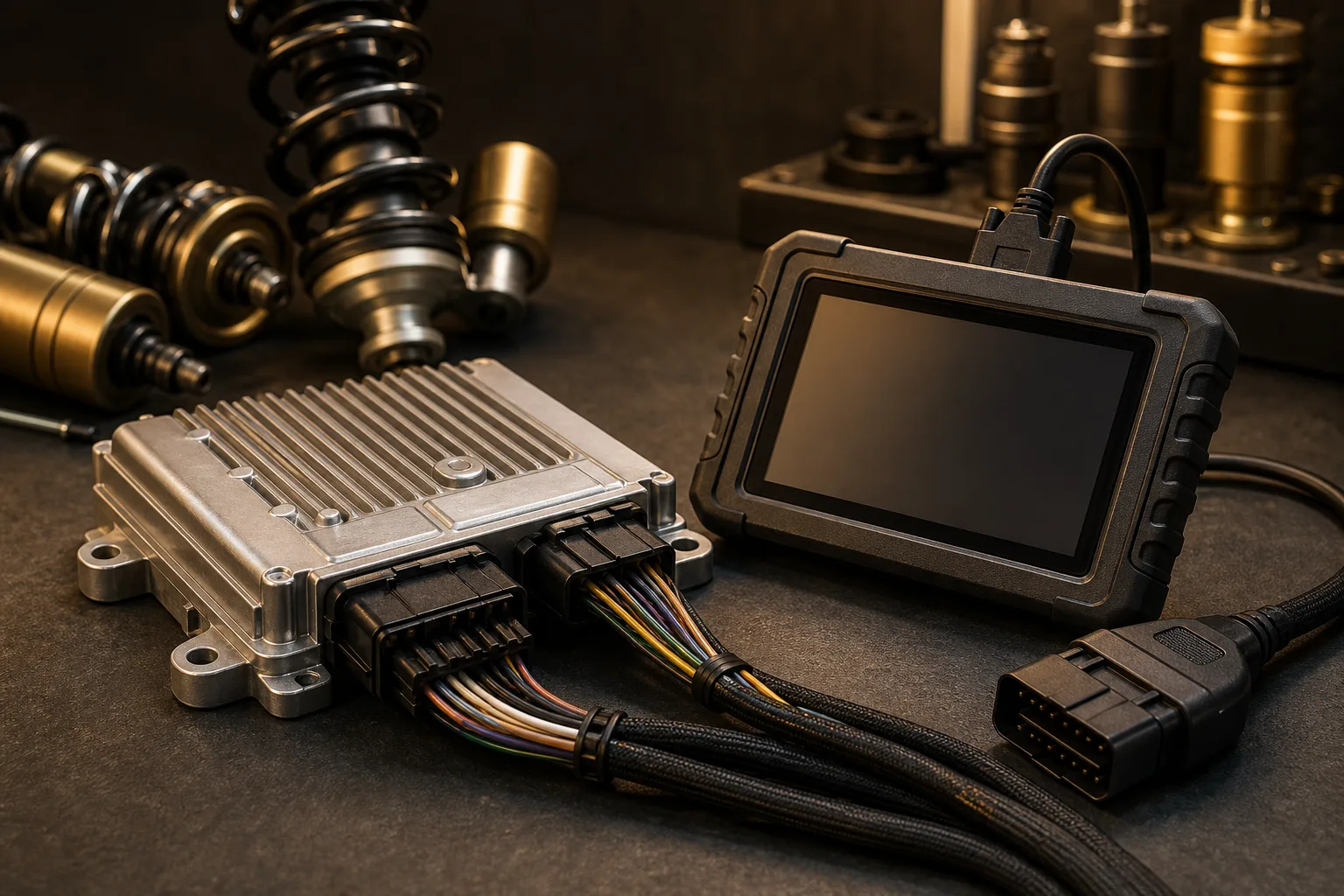
Most platforms combine body acceleration sensors, ride height sensors, steering angle input, and damper actuators managed by a dedicated control module. The module calculates target damping values and sends commands to solenoids or stepper motors integrated into each shock absorber or strut.
Because the system relies on continuous feedback, a single sensor reading outside expected range can force the module into a default mode — often stiffer damping on all corners. Understanding which module stores fault data and which parameters reflect live actuator status is the starting point for any diagnosis.
Initial Scan and Symptom Correlation
We begin with a full system scan across all vehicle networks, not just the powertrain. Suspension-related codes may appear in the chassis or body control modules depending on architecture. Freeze frame data captured at the time of the fault often reveals vehicle speed, ride height deviation, or supply voltage conditions that explain intermittent behavior.
Comparing stored codes with owner-reported conditions helps separate genuine actuator failures from environmental triggers such as low battery voltage, corroded connectors exposed to road spray, or aftermarket modifications that alter ride height outside calibrated limits.
Actuator Response Testing
Bi-directional controls allow technicians to command individual dampers through their full range while monitoring feedback current or position signals. A damper that fails to respond, responds slowly, or draws abnormal current typically confirms a mechanical or internal electrical fault within the strut assembly.
Before condemning an actuator, we verify wiring integrity from the control module to each corner, inspect connector pins for moisture intrusion, and confirm that ride height sensors report consistent values with the vehicle on level ground.
Road testing after actuator verification confirms whether ride quality has returned to expected behavior across comfort and sport modes. Some faults only appear under specific load or temperature conditions, which is why documenting test conditions matters for follow-up evaluation.
Documentation Before Component Replacement
Electronic suspension components can represent a significant repair investment. We document scan results, live data captures, actuator test outcomes, and visual inspection notes before recommending replacement. This gives vehicle owners a clear basis for the proposed repair and reduces unnecessary part swaps when a wiring repair resolves the issue.
After repair, control modules often require calibration or adaptation procedures so the system relearns baseline ride height and damping maps. Skipping these steps can leave the vehicle in a restricted mode even with new components installed.
When Professional Diagnosis Is Needed
Ride quality changes combined with suspension warning messages warrant a structured diagnostic approach rather than replacing parts based on code descriptions alone. If your vehicle shows intermittent suspension warnings or handling changes, our Mesa workshop can perform network-wide scanning, actuator testing, and documented evaluation specific to your platform.