EGR Valve Faults: Symptoms, Testing Methods, and Repair Options
The exhaust gas recirculation system reduces combustion temperatures by routing a measured portion of exhaust back into the intake. When the EGR valve sticks open, fails to open on command, or allows leakage past the seat, engine performance and emissions control both suffer. Because EGR faults share symptoms with ignition and fuel delivery problems, accurate isolation requires more than reading a single stored code.
Symptoms Owners Often Report
- Rough idle or stalling when the engine is warm
- Reduced power under light throttle, especially at low RPM
- Check engine light with EGR flow or position codes
- Failed emissions inspection due to elevated NOx or incomplete monitor readiness
- Knocking or pinging under load when the system fails to recirculate properly
These symptoms overlap with vacuum leaks, clogged injectors, and ignition timing issues. That overlap is why we treat EGR diagnosis as one part of a broader engine health assessment rather than a standalone parts replacement.
Visual and Mechanical Inspection
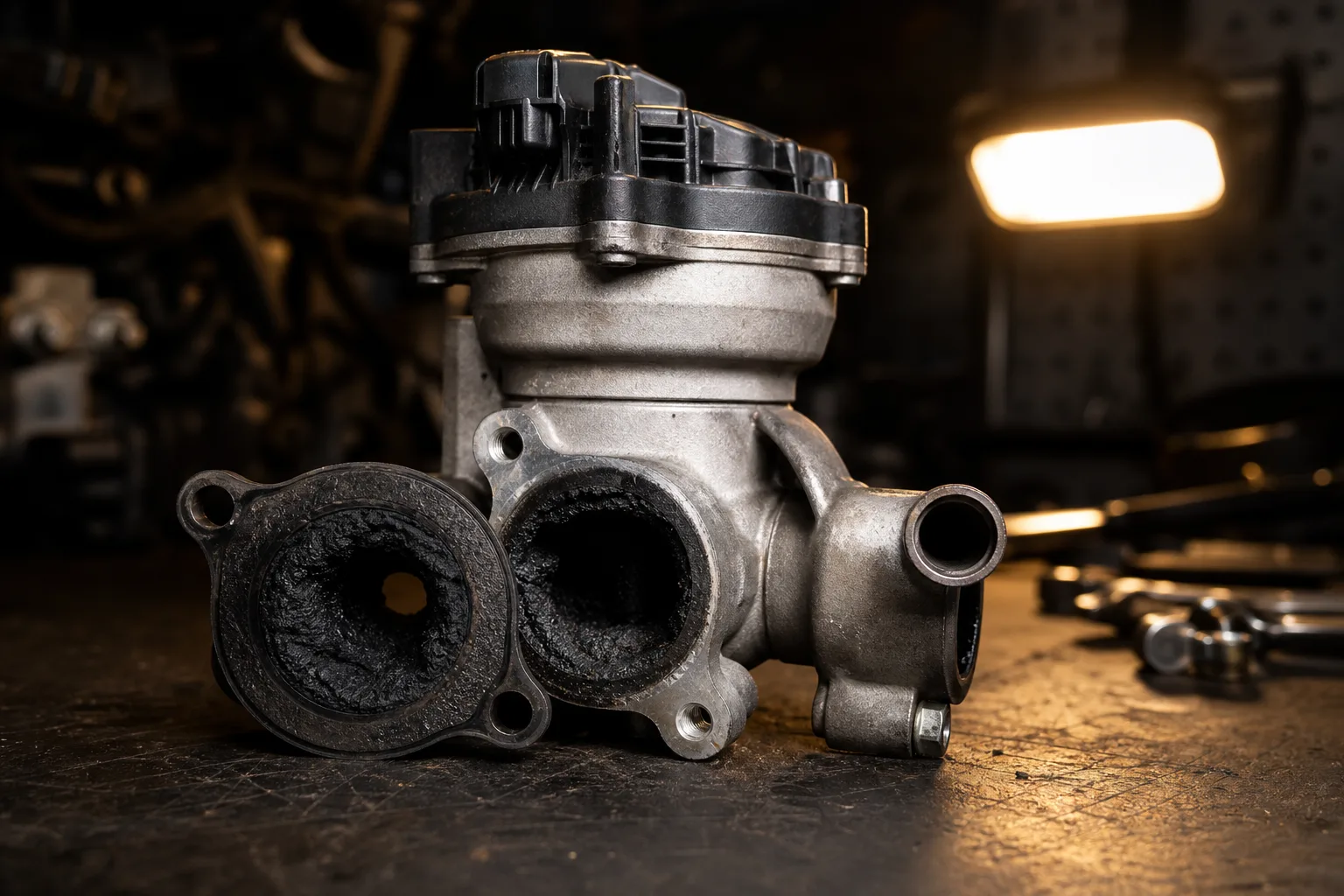
Carbon accumulation is the most common mechanical cause of EGR valve sticking. Removing the valve for inspection often reveals heavy deposits on the pintle and seat, or blockage in the intake passage that feeds recirculated gas. We assess whether cleaning can restore function or whether internal sealing surfaces are too worn for reliable operation.
Coolant-cooled EGR valves on diesel and some gasoline platforms require additional checks for internal coolant leaks, which can introduce white exhaust smoke and contaminate the intake tract. Vacuum-operated valves need hose routing verification and diaphragm integrity testing under controlled vacuum application.
Pressure Testing and Live Data Comparison
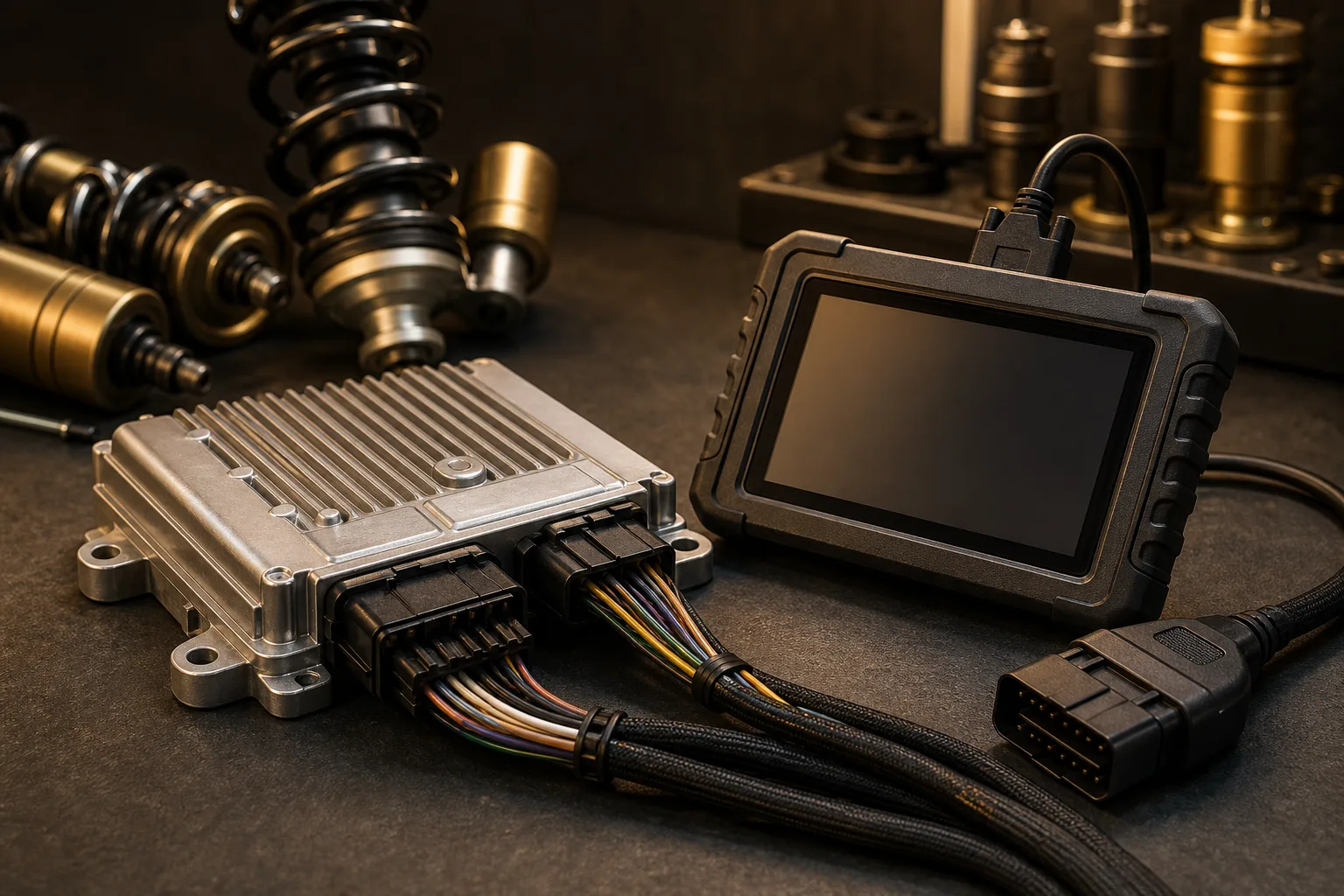
Commanding the EGR valve open and closed while monitoring intake manifold pressure, mass airflow, and commanded versus actual position provides strong evidence of mechanical response. A valve that commands open but produces no change in measured flow suggests blockage downstream or a failed actuator.
Comparing live data before and after EGR command helps distinguish valve faults from MAP sensor drift or intake leaks. On platforms with EGR coolers and differential pressure sensors, we verify that sensor readings align with expected flow rates under known operating conditions.
Freeze frame data captured at the time of the fault often shows engine temperature, load, and fuel trim values that explain why the code set under specific driving conditions rather than at idle in the workshop bay.
Repair Options and Related Components
Repair may involve cleaning the valve and intake passages, replacing gaskets and hardware, or fitting a new valve assembly when internal wear prevents consistent sealing. In some cases, carbon buildup in the intake manifold requires removal and cleaning to prevent immediate recurrence of flow restriction codes.
We also inspect the EGR temperature sensor, differential pressure sensor, and control solenoids where applicable. Replacing the valve without addressing a blocked passage or failed sensor often leads to repeat visits with the same symptom pattern.
Preventive Maintenance and Next Steps
Short-trip driving profiles and extended idle periods accelerate carbon formation in EGR circuits. Following manufacturer service intervals for intake cleaning, using recommended fuel quality, and addressing misfire or oil consumption issues early all reduce the rate at which deposits accumulate.
If your vehicle shows performance changes alongside emissions-related warning codes, a structured diagnostic process can confirm whether the EGR system is the root cause. Contact neurogliazx in Mesa to schedule an evaluation — we document test results before recommending any repair path.